"There are fights all the time": despite the anger of local residents, shooting galleries are heading towards an extension
The future of the two addiction treatment centers, nicknamed " shooting galleries ," in Paris and Strasbourg is uncertain. These facilities allow drug users to take substances in a safe environment.
These programs, which have been in operation since 2016, were scheduled to close on December 31, 2025, but an amendment to the Social Security Finance Bill , adopted this weekend, extends the experiment until 2027. It remains to be seen whether this will be included in the final text.

Meanwhile, every day of the week, from 9:30 a.m. to 8:30 p.m., in the addiction care center in the 10th arrondissement of Paris, next to the Lariboisière hospital , 300 injections take place.
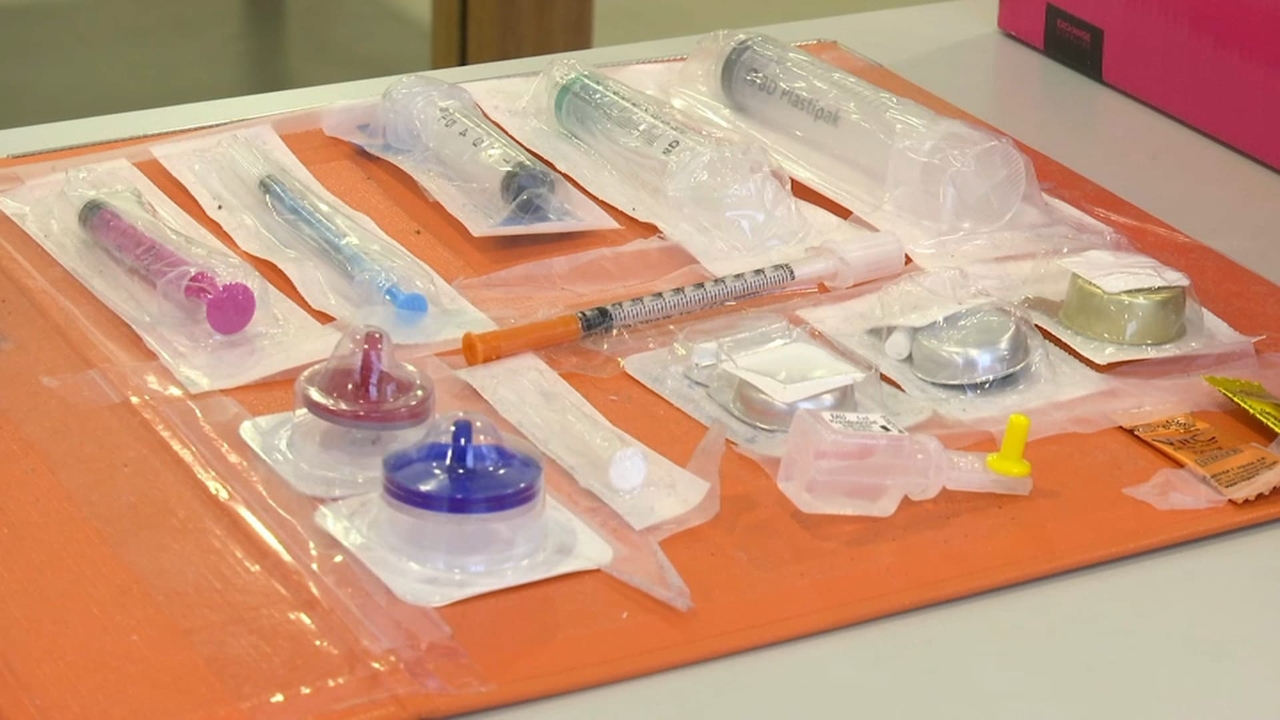
In total, 800 people regularly use this facility, and more than half of them are homeless. The vast majority are men. They must be of legal age, bring their own drugs, and undergo a medical interview before injecting themselves with sterile equipment provided on site. All of this takes place under the supervision of doctors who accompany them, explains Dr. Élisabeth Avril. She heads the Gaïa association, which manages this "Addiction Treatment Center."
“The idea is also to improve people’s overall situation, so it can involve addiction treatment with support, consultations with a psychiatrist…,” she emphasizes.
Mediators are also present to manage conflicts . The association notably conducts outreach patrols in the neighborhood to redirect people using drugs on the street to the center. However, it remains difficult to permanently detoxify those who come here, even though Élisabeth Avril observes some results. “We have approximately 55 people starting inpatient detox programs each year. What becomes of them in two, three, or four years, I can't tell you,” she says.
Since he started coming here, Blanco, a user of the facility, hasn't reduced his consumption of morphine sulfate and cocaine, the two most commonly injected drugs here. “I come every day. I'm here from 4 p.m. to 8 p.m. It would be good if the facility stayed open because injecting drugs outside isn't very good. You can get diseases,” he says.
Several studies call for the permanent establishment of addiction treatment centers . In 2021, Inserm estimated that they prevented 43 deaths. In 2024, a report by the General Inspectorate of Administration stated that crime had even decreased in the vicinity of the Parisian venue. An evaluation by the Interministerial Mission for the Fight Against Drugs noted a “significant reduction in disturbances.”
However, some residents near the facility are very upset. This latest report also notes tensions. Ulas is one of the shopkeepers calling for the closure of the addiction treatment center. He runs a driving theory test center just steps away from the facility.
“They’re not just in the shooting room, they also come to shoot up right next to the store door. Even for the building, there are a lot of children, parents who are not happy… We are not at ease,” he emphasizes.
A sentiment shared by Thierry, a member of the “Riverains Lariboisière Gare du Nord” collective. “This facility leads to excessive drug use in the street, with people coming to inject drugs and discarding their equipment in public spaces. We are witnessing a resurgence of all kinds of disturbances: fights, shouting, and constant drug trafficking,” he emphasizes.
But Cécile Dumas, from the “La Traverse du 10e” collective, believes the situation has improved. “Long before the facility opened, a child playing in some bushes pricked himself with a syringe that had been left there after drug use. In fact, for years and years, this area was a scene of open drug use. And when the facility opened, that scene disappeared,” she asserts.
For now, the experiment is extended for two years in the social security bill, if, of course, it is passed as is.

RMC